Center for Independent Social Research


CISR – USA

Expertise
Post‑Сommunist
Societies

Mission Statement

Center for Independent Social Research, Inc.  (CISRus)

CISRus is a non-profit association of scholars and experts working on issues related to the post-communist transformation. We conduct unbiased, in-depth social research to enrich scientific knowledge and strengthen civil society.

  • Our academic mission is to improve scholarly understanding of post-communist societies using knowledge drawn from interdisciplinary work in the social sciences.

  • Our educational mission is to support students and young scholars in the social sciences during the early stages of their professional careers.

CISRus Projects
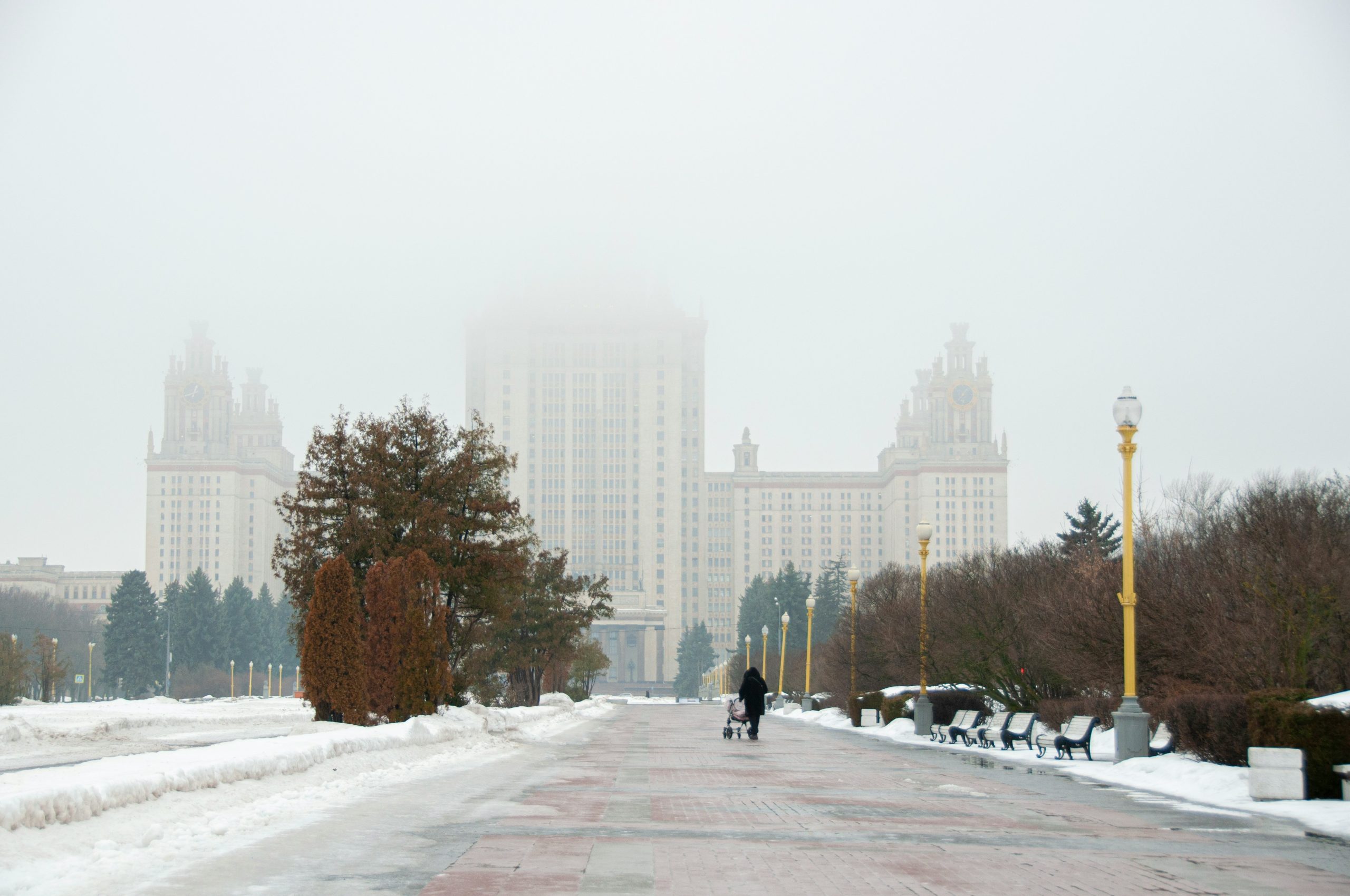
Promoting Academic Freedom in Russia and the Post-Soviet Region

2023 – 2025

This project seeks to deepen understanding and raise public and scholarly awareness of the limitations on academic freedom in Russia and other post-Soviet countries.
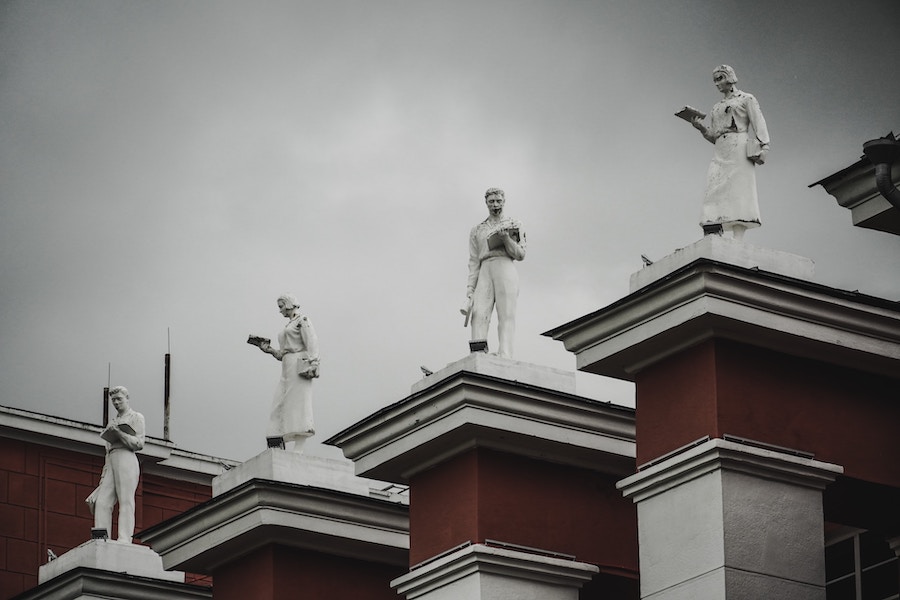
Russia: Violations of academic freedom in 2023

The socio-political context and persecution of scientists and teachers

2024

Our selection method is based on the Scholars at Risk methodology for identifying violations of the academic rights and freedoms of teachers and students. 

“Anti-War Civic Mobilization in Russia”

The response of Russian civil society to the war in Ukraine.

2022 – 2024

The purpose of the project is to explore the response of Russian civil society to the war in Ukraine with special focus on anti-war activism at the grass-roots level.

“Non-Profit Lawyers Working with the Victims of Domestic Violence:

Best Practices, Legal Mechanisms and Substantive Networks”

2021

The main purpose of the project is the cross-border exchange of professional experience in helping the victims of domestic violence in the United States and Russia. Another purpose of the project is to get acquainted with the existing infrastructure of US organizations and institutions assisting victims of domestic violence.

“Teaching Math in the USA:

Professional Integration of High-Skilled Female Immigrants from Russia and the FSU”

2020-2021

The object of the study is so-called “Russian math education”—a specific professional and educational niche within the sector of supplementary after-school education created by Russian (female) immigrants.
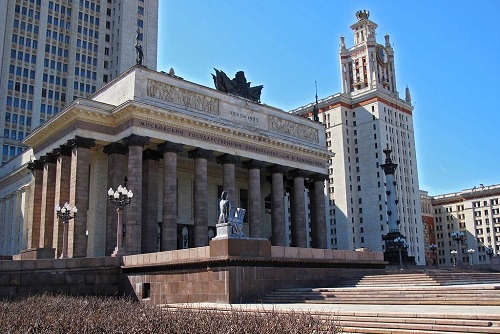
“Academic
Freedom” 

2020-2021

The project implies monitoring, analyzing, and raising awareness of issues surrounding academic freedom in Russia and post-Soviet countries.

“Russian Youth
and Corruption”

2019

The study of attitudes towards corruption among Russian Generation Z including nine focus groups with university students in three Russian cities.  

Call for Papers (Special Issue)

Academic Freedom, Integrity, and Governance in Central Asia:

Theory, Practice, and Emerging Challenges

Academic freedom—understood as a normative foundation of higher education and a precondition to produce reliable knowledge—has become both an object of intense debate and a growing field of scholarly inquiry. Classical and contemporary theories conceptualize academic freedom variously as an individual right of scholars, an institutional condition of university autonomy, and a relational practice shaped by governance, power, and professional norms. In recent years, these theoretical debates have gained renewed urgency across different world regions.

These issues were central to two panels at the conference “Academic Freedom in Flux: Purpose, Beneficiaries, and Practices in the Contemporary World,” held on 16–18 October 2025 at the Tashkent State University of Economics. Discussions highlighted a set of challenges that transcend national contexts: the managerialization of higher education; the tightening of regulatory and political oversight over universities; and shifting modes of interaction between academic institutions and the state, society, business, and civil society.

For Central Asia, these debates are particularly salient. Ongoing reforms in higher education and research, coupled with the growing prominence of science and education in national development strategies, have reconfigured the institutional environment in which academic freedom is practiced. While reform agendas are often framed in terms of global competitiveness and integration into international academic markets, they simultaneously raise fundamental questions about how academic freedom and institutional autonomy are interpreted, negotiated, and protected in practice.

This special issue approaches academic freedom not only as a legal or declarative principle, but as a socially embedded practice shaped by governance regimes, professional cultures, and informal norms. Attention is paid to the tension between formal regulation and informal arrangements in research and higher education, including state–university relations, the effectiveness of academic self-governance, and the institutionalization of academic integrity.

A new and increasingly consequential dimension of these debates concerns the rapid diffusion of artificial intelligence in higher education and research. AI-driven tools—ranging from text generation and data analysis to automated assessment and surveillance—are reshaping everyday academic practices. In the Central Asian context, these technologies raise pressing questions about academic integrity, authorship, evaluation, control, and trust, as well as about new forms of dependency, oversight, and inequality. The intersection of AI, academic freedom, and integrity thus represents a critical and underexplored area for empirical and theoretical inquiry in the region.

At the same time, Central Asia’s historical experience makes it essential to address broader structural issues, including epistemic justice, academic imperialism, and academic colonialism. Scholars working in and on the region continue to navigate global hierarchies of knowledge production that affect research agendas, publication practices, and standards of academic “excellence.” Gender equality and inclusion, while not the primary focus of this issue, remain an important contextual dimension of academic development and are welcomed as part of broader, analytically grounded contributions.

This special issue invites submissions that engage theoretically and empirically with academic freedom, academic integrity, and institutional autonomy in Central Asia, both historically and in the present. We particularly welcome contributions based on original empirical materials and approaches from sociology, political science, history, education studies, and related disciplines.

Suggested themes include (but are not limited to):

  • Theories of academic freedom and their applicability beyond Western institutional contexts
  • Managerial reforms and their consequences for academic freedom and institutional autonomy
  • Governance, self-rule, and power relations within universities
  • State–university relations and regulatory regimes shaping research and teaching
  • Academic integrity: norms, enforcement mechanisms, and institutional cultures
  • Artificial intelligence in higher education: implications for academic integrity, evaluation, and freedom
  • Formal rules versus informal practices in research and higher education
  • Epistemic justice, knowledge hierarchies, and global academic inequality
  • Academic imperialism, colonial legacies, and decolonial approaches in and about Central Asia
  • Academic labor, precarity, mobility, and patterns of brain drain and circulation
  • Gender equality and inclusion in academia as a contextual and institutional dimension
  • Soviet and post-Soviet legacies of higher education and their contemporary reinterpretations

Guest Editors:

Dmitry Dubrovskiy, PhD. Department of Social Sciences, Charles University, Prague

Feruza Madaminova, PhD, International School of Finance Technology and Science (ISFT Institute), Tashkent

Assylzat Karabayeva, PhD, College of Social Sciences, KIMEP University, Almaty.

Deadline: May 15, 2026

Kindly make sure to consult the journal’s submission guidelines before submitting your manuscript.

!! Please don’t use the online submission system!!

All submissions should be sent to madaminovaferuza.f@gmail.com

Please use the subject line: ‘Central Asia Affairs – Special Issue’

In the new year, the blog about academic freedom “Gaudeamus” moved to its own website.
Read it here.

CISRus Partners

Foreign agents

The term ‘foreign agent’ was initially introduced in Russin federal law in 2012

Autonomy of universities

has been decreasing after launching the Federal Universities project

rubles in a year

The average salary of rectors of public universities in 2018

Leading Universities

Participants of the Project 5-100 to be more competitive globally

Contact Us

3 + 8 =